aamnativeAUTHENTIC ALPHONSO
Google Lens & Multimodal Identification Field Guide

How to Identify Any Indian Mango
By Photo, Shape, Color Gradient & Beak

Ever photographed a mango on your kitchen counter and wondered what cultivar it actually is? With over 1,000 regional cultivars across India, visual identification relies on four precise morphological markers: Apex/Beak curvature, Peel gradient, Shoulder symmetry, and Weight ratio. Here is the definitive visual identification key for all original authentic Indian mangoes.

The 4-Point Visual Inspection Protocol

Step 1: Check Shape

Is it spherical (Malgova), medium oval (Alphonso), slender-torpedo (Dasheri), or hooked beak (Totapuri, Chausa)?

Step 2: Inspect Peel Color

Does it turn saffron gold with green shoulder (Alphonso), remain emerald green (Langra), or show carmine red blush (Totapuri)?

Step 3: Feel Weight in Hand

Heavyweight 400-600g (Malgova, Imam Pasand), standard 220-270g (Alphonso, Kesar), or slim 150-200g (Dasheri)?

Step 4: Examine the Beak

Rounded beakless apex (Alphonso), upturned sharp beak (Jardalu), or curved parrot snout (Totapuri)?

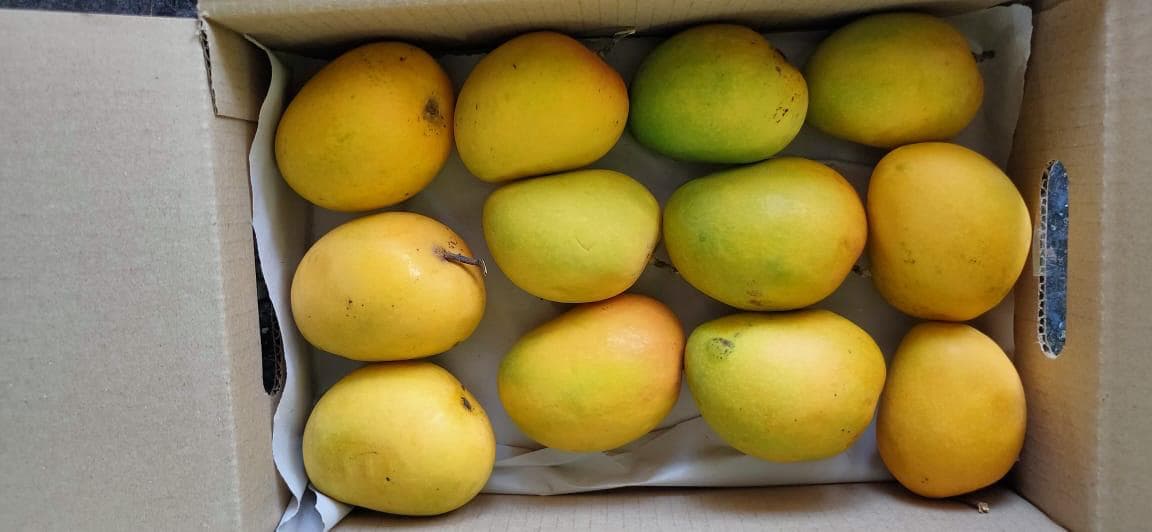
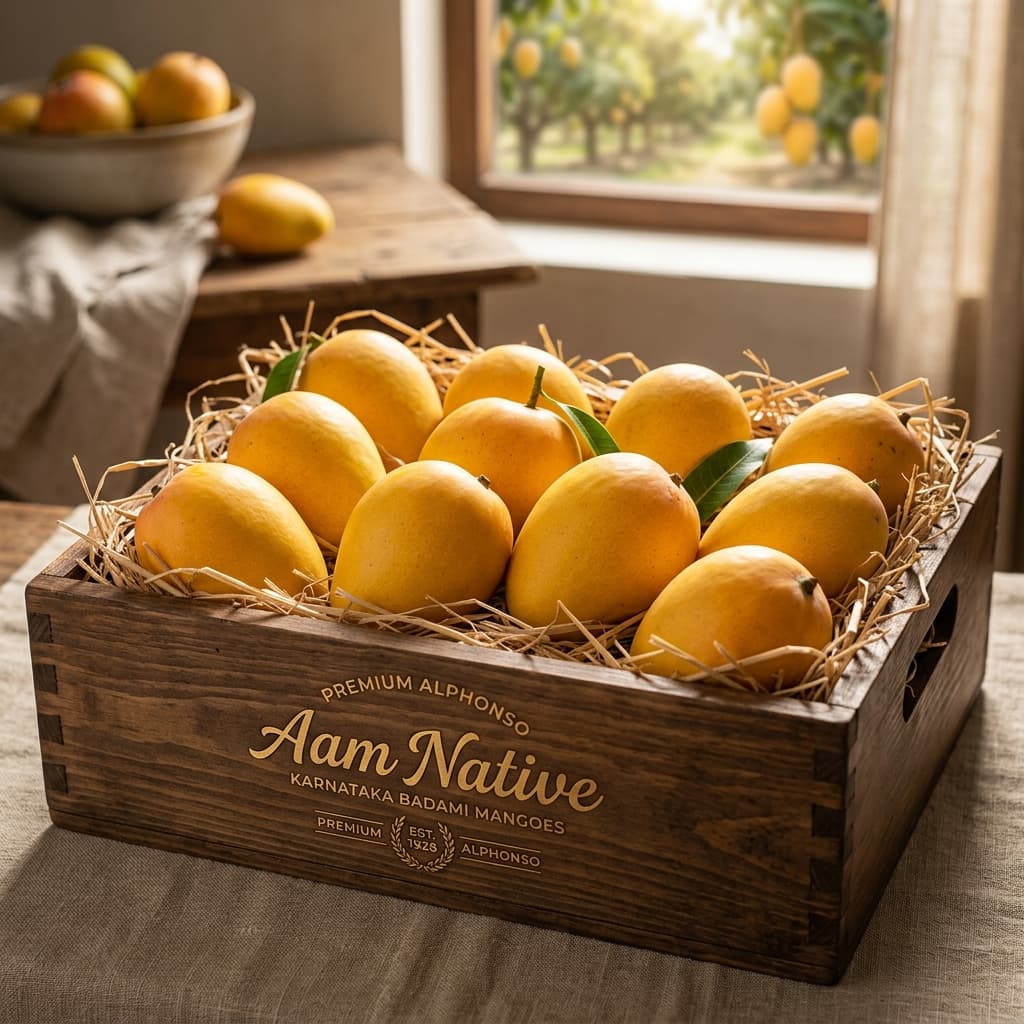
Visual identification profile photo of Ratnagiri Alphonso (Hapus) showing Medium Ovate (oblique shoulder with gentle oval curve) and natural peel color gradient
Visual Reference: Ratnagiri Alphonso (Hapus) (220 - 270g per fruit)

Ratnagiri Alphonso (Hapus)

GI Certified Origin

πŸ“ Native Provenance: Ratnagiri, Konkan, Maharashtra

ShapeMedium Ovate (oblique shoulder with gentle oval curve)
Average Weight220 - 270g per fruit
Brix Sweetness18 - 22Β° Brix
Beak FeatureRounded apex with almost no beak; shallow sinus depression

Peel Gradient: Warm saffron-gold with an emerald-green shoulder when naturally ripened (never fluorescent yellow)

Pulp & Fiber: Deep saffron-orange, completely fibreless, velvety custard texture

πŸ” The Dead Giveaway: Intense room-filling saffron perfume and a natural green shoulder gradient that stays even when fully ripe.
Explore Complete Variety Guide
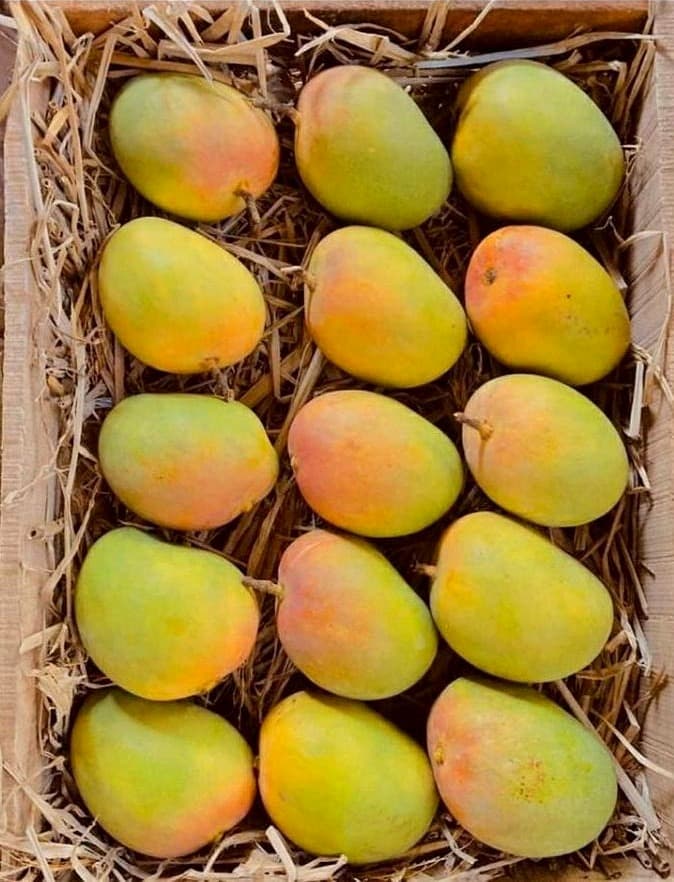
Visual identification profile photo of Devgad Alphonso (Hapus) showing Rounder Ovate with thicker shoulders than Ratnagiri Hapus and natural peel color gradient
Visual Reference: Devgad Alphonso (Hapus) (210 - 260g per fruit)

Devgad Alphonso (Hapus)

GI Certified Origin

πŸ“ Native Provenance: Devgad, Sindhudurg, Maharashtra

ShapeRounder Ovate with thicker shoulders than Ratnagiri Hapus
Average Weight210 - 260g per fruit
Brix Sweetness19 - 22Β° Brix
Beak FeatureSmooth rounded apex without beak

Peel Gradient: Golden apricot yellow; thinner and waxier peel due to laterite rock terrain

Pulp & Fiber: Silky, honeyed saffron pulp with zero fiber and slight tropical tang

πŸ” The Dead Giveaway: Ultra-thin, paper-like peel with sunset coral blush across the shoulders. Note the authentic 15-fruit wooden peti packed in organic rice straw with intact harvest stems.

Explore Complete Variety Guide
Visual identification profile photo of Malgova (Mulgoba) showing Heavyweight Globose (massive spherical round shape) and natural peel color gradient
Visual Reference: Malgova (Mulgoba) (400 - 650g per fruit (can reach 800g))

Malgova (Mulgoba)

πŸ“ Native Provenance: Salem & Dharmapuri (Tamil Nadu), Karnataka

ShapeHeavyweight Globose (massive spherical round shape)
Average Weight400 - 650g per fruit (can reach 800g)
Brix Sweetness16 - 19Β° Brix
Beak FeatureBroad rounded apex; faint sinus depression

Peel Gradient: Olive green to pale canary yellow with characteristic tiny carmine speckles

Pulp & Fiber: Pale golden yellow, exceptionally dense, thick and meaty; low fiber

πŸ” The Dead Giveaway: Colossal round shape resembling a small melon with olive-green undertones even at full ripeness.

Explore Complete Variety Guide
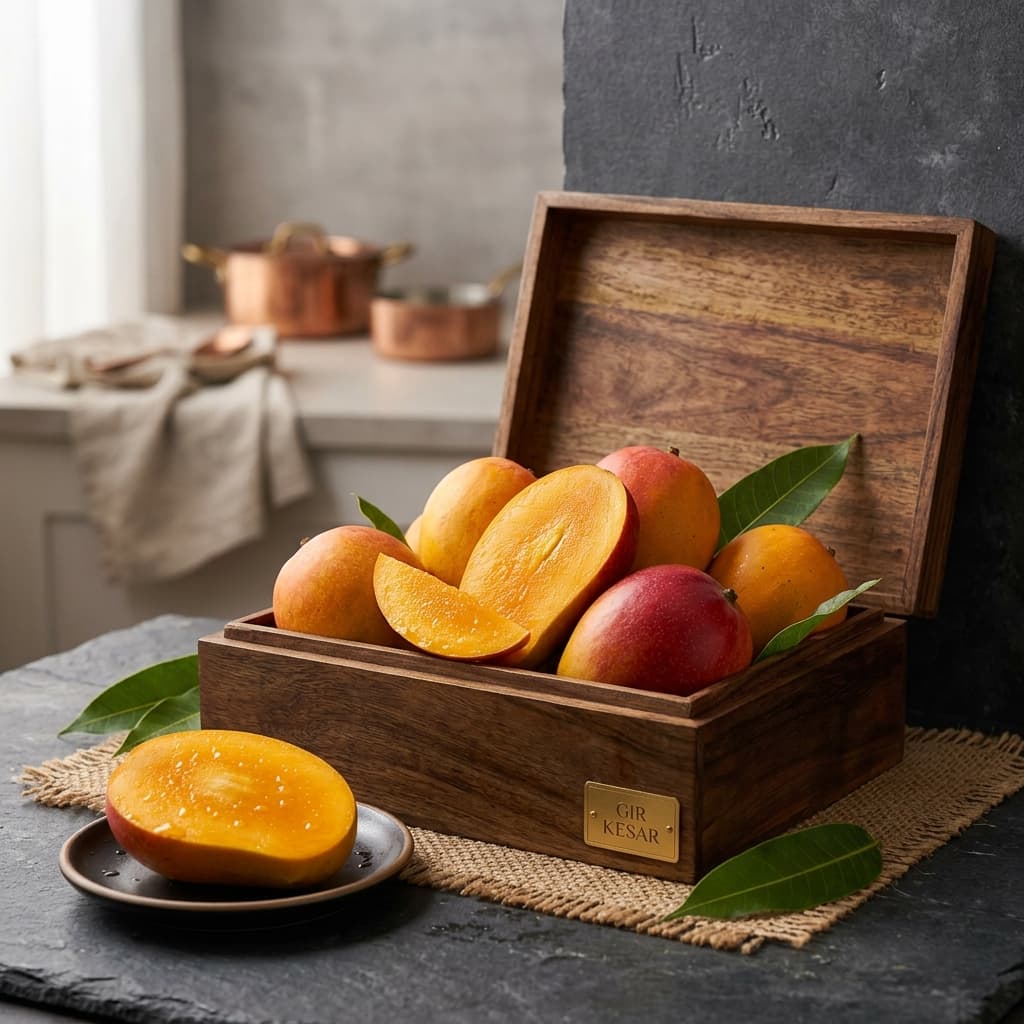
Visual identification profile photo of Gir Kesar showing Oblong with an elegant slight curved dorsal hump and natural peel color gradient
Visual Reference: Gir Kesar (220 - 280g per fruit)

Gir Kesar

GI Certified Origin

πŸ“ Native Provenance: Junagadh & Gir Foothills, Gujarat

ShapeOblong with an elegant slight curved dorsal hump
Average Weight220 - 280g per fruit
Brix Sweetness18 - 21Β° Brix
Beak FeatureProminent rounded beak tip with a noticeable depression

Peel Gradient: Dull orange-yellow with greenish patches; distinct saffron hue as it matures

Pulp & Fiber: Intense saffron-colored flesh; ultra-sweet with balanced tartness, ideal for thick aamras

πŸ” The Dead Giveaway: Distinctive hooked curved tip and bright orange interior that gives aamras its signature vivid color.

Explore Complete Variety Guide
Visual identification profile photo of Imam Pasand (Himayat) showing Large broadly ovate with prominent swelling shoulder and natural peel color gradient
Visual Reference: Imam Pasand (Himayat) (350 - 550g per fruit)

Imam Pasand (Himayat)

πŸ“ Native Provenance: Andhra Pradesh & Telangana

ShapeLarge broadly ovate with prominent swelling shoulder
Average Weight350 - 550g per fruit
Brix Sweetness18 - 21Β° Brix
Beak FeatureSmall distinct pointed beak at the ventral apex

Peel Gradient: Mottled yellow-green with pale lenticel pores (spots); soft, delicate skin

Pulp & Fiber: Pale primrose yellow, completely fibreless, coconut-cream and musky honey flavour

πŸ” The Dead Giveaway: Paper-thin flat seed inside a massive 450g fruitβ€”one of the highest meat-to-stone ratios in the world.

Explore Complete Variety Guide
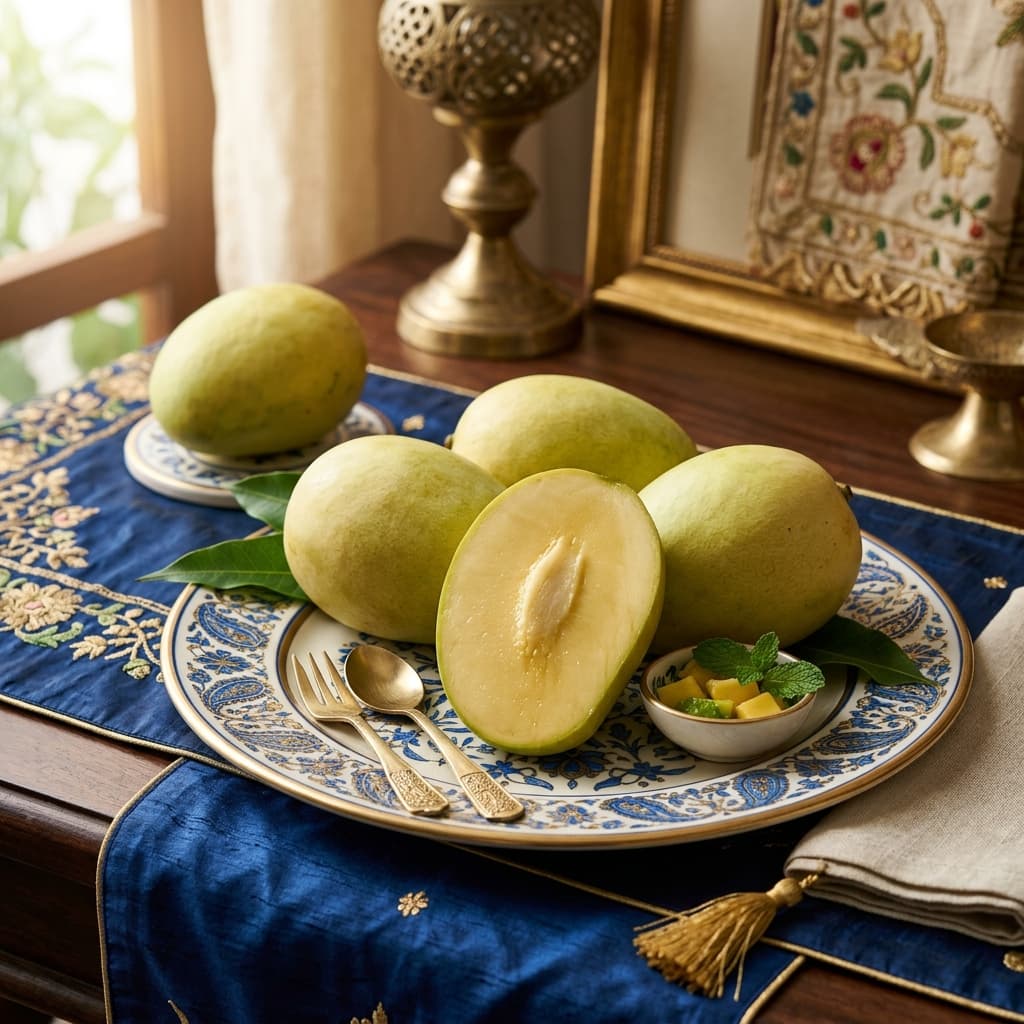
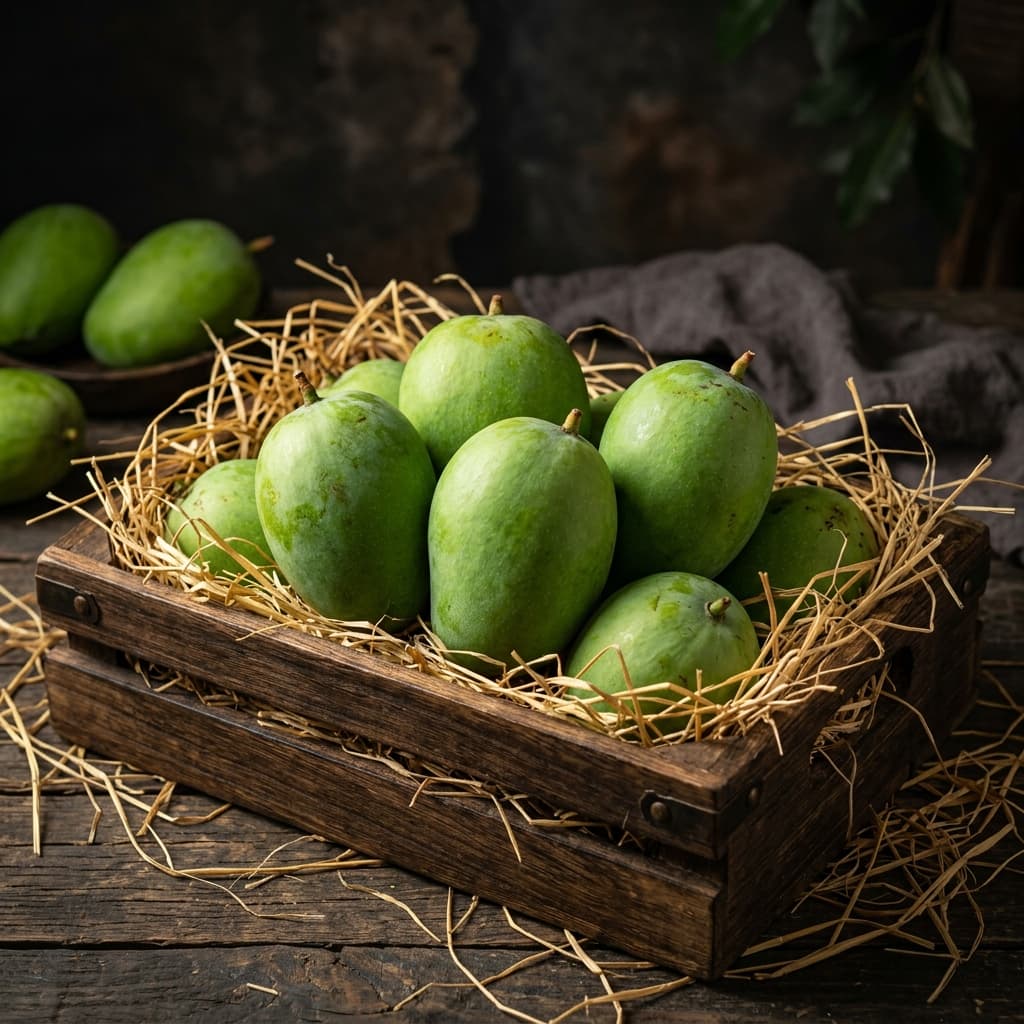
Visual identification profile photo of Banarasi Langra showing Ovate to roundish oval with slightly flattened base and natural peel color gradient
Visual Reference: Banarasi Langra (220 - 300g per fruit)

Banarasi Langra

GI Certified Origin

πŸ“ Native Provenance: Varanasi, Uttar Pradesh & Bihar

ShapeOvate to roundish oval with slightly flattened base
Average Weight220 - 300g per fruit
Brix Sweetness19 - 22Β° Brix
Beak FeatureProminent, distinct beak jutting outwards

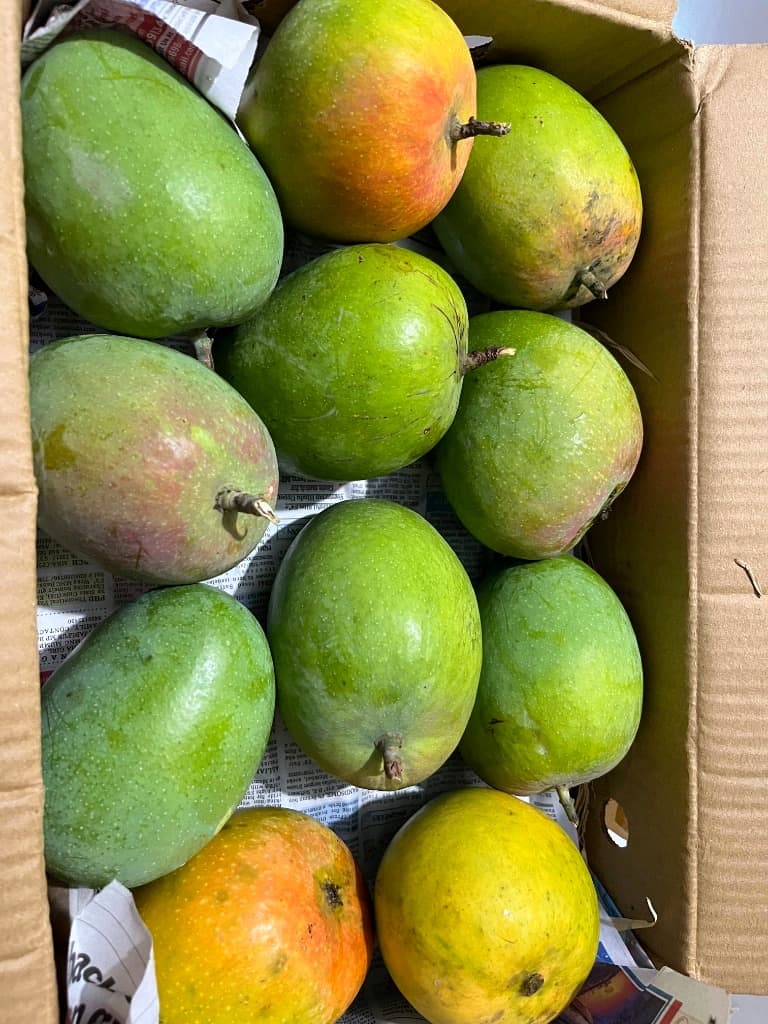
Peel Gradient: Stays bright parrot-green even when completely table ripe (never turns yellow)

Pulp & Fiber: Lemon yellow, delightfully melting, refreshing sweet-acidic punch

πŸ” The Dead Giveaway: Intense citrusy aroma while remaining completely green on the outside.

Explore Complete Variety Guide
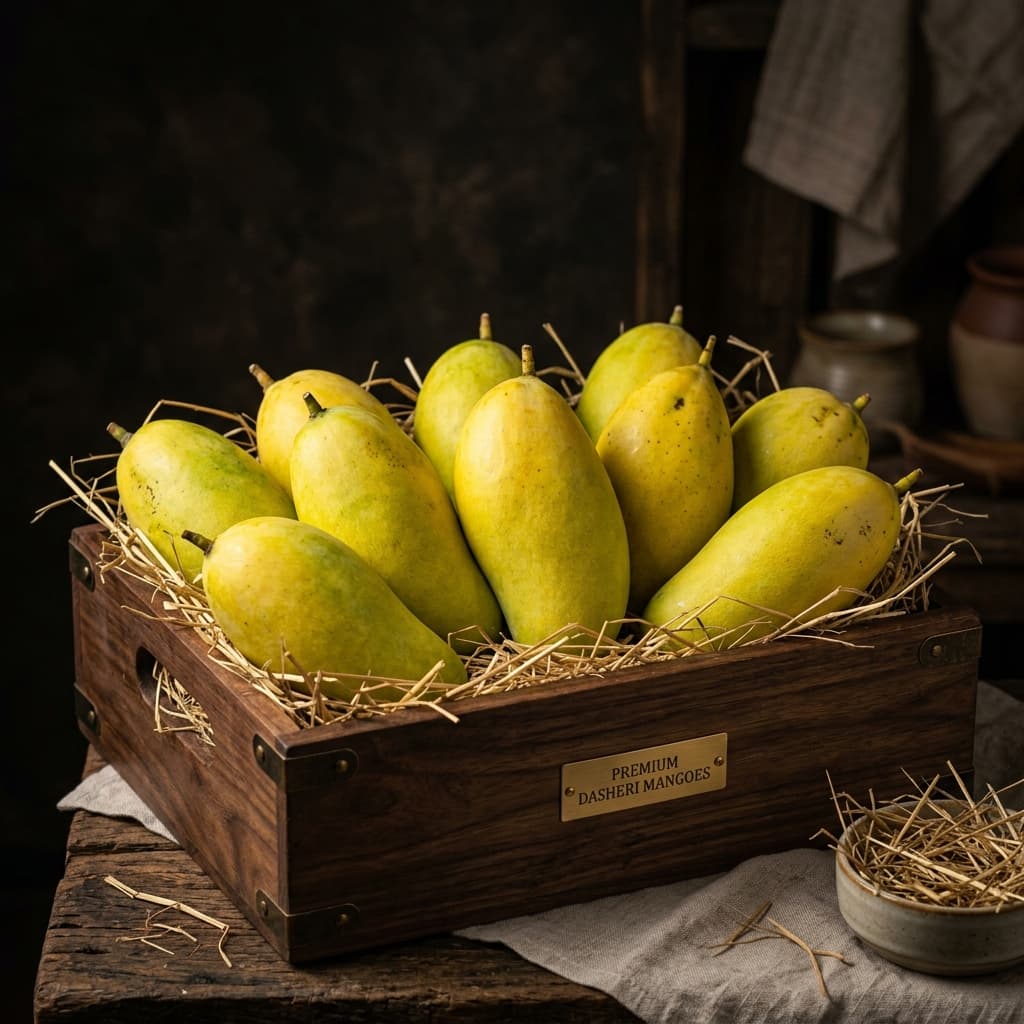
Visual identification profile photo of Malihabadi Dasheri showing Slender, elongated cylindrical with parallel dorsal sides and natural peel color gradient
Visual Reference: Malihabadi Dasheri (150 - 220g per fruit)

Malihabadi Dasheri

GI Certified Origin

πŸ“ Native Provenance: Malihabad, Lucknow, Uttar Pradesh

ShapeSlender, elongated cylindrical with parallel dorsal sides
Average Weight150 - 220g per fruit
Brix Sweetness18 - 20Β° Brix
Beak FeatureSmall, rounded beak tip

Peel Gradient: Pale greenish-yellow maturing to warm butter-yellow; smooth and thin

Pulp & Fiber: Firm yet silky, stringless, mild perfumed sweetness

πŸ” The Dead Giveaway: Long, slim torpedo shape that fits comfortably in the palm of your hand.

Explore Complete Variety Guide
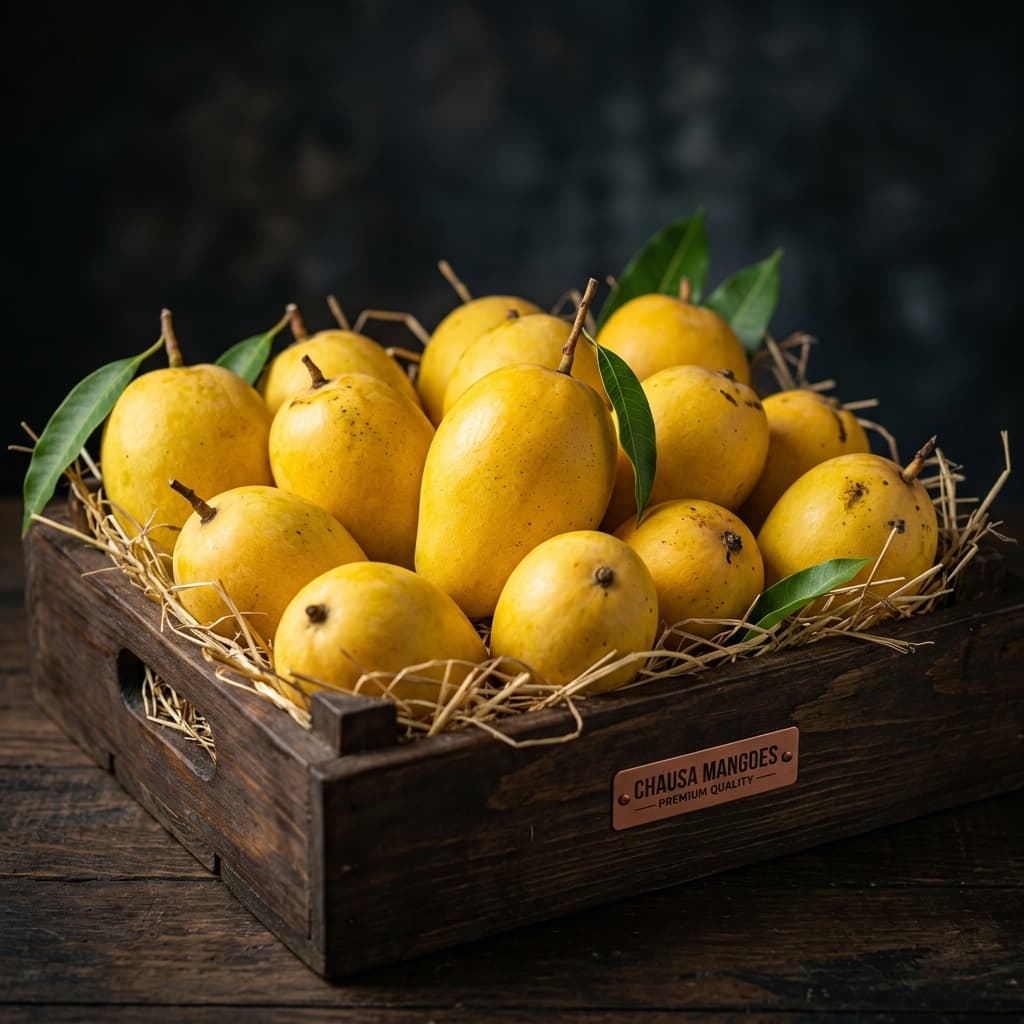
Visual identification profile photo of Chausa showing Ovate-oblong with a pronounced curved shoulder and hook and natural peel color gradient
Visual Reference: Chausa (250 - 350g per fruit)

Chausa

πŸ“ Native Provenance: Hardoi, Malihabad & Bihar

ShapeOvate-oblong with a pronounced curved shoulder and hook
Average Weight250 - 350g per fruit
Brix Sweetness20 - 23Β° Brix
Beak FeatureProminent, gracefully curving beak

Peel Gradient: Bright golden yellow with a high waxy gloss when ripe

Pulp & Fiber: Extremely juicy, golden nectar pulp; honeyed sweetness with near-zero acidity

πŸ” The Dead Giveaway: Liquid-gold syrupy juice that drips when pierced; traditionally enjoyed by gentle hand-squeezing (chusa).

Explore Complete Variety Guide
Visual identification profile photo of Banganapalli (Safeda / Benishan) showing Large, obliquely oval with a broad shoulder and tapering tail and natural peel color gradient
Visual Reference: Banganapalli (Safeda / Benishan) (350 - 450g per fruit)

Banganapalli (Safeda / Benishan)

GI Certified Origin

πŸ“ Native Provenance: Banganapalle, Kurnool, Andhra Pradesh

ShapeLarge, obliquely oval with a broad shoulder and tapering tail
Average Weight350 - 450g per fruit
Brix Sweetness16 - 18Β° Brix
Beak FeatureTapering apex with faint beak

Peel Gradient: Uniform bright golden-yellow with fine scattered speckles; smooth skin

Pulp & Fiber: Firm, canary-yellow meat with zero fiber; slices into crisp, neat geometric wedges

πŸ” The Dead Giveaway: Big, clean, blemish-free yellow surface that holds firm slices without leaking juice on the cutting board.

Explore Complete Variety Guide
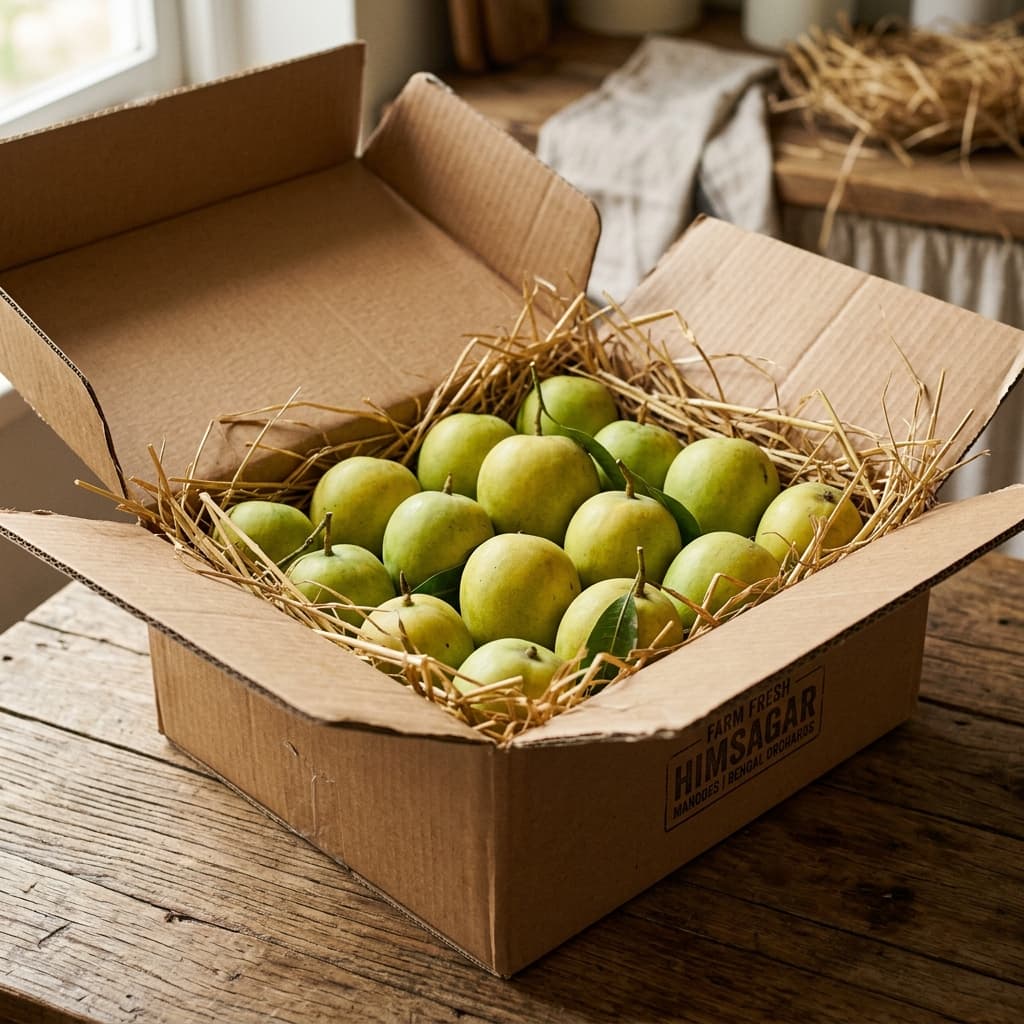
Visual identification profile photo of Himsagar showing Medium roundish ovate with equal rounded shoulders and natural peel color gradient
Visual Reference: Himsagar (220 - 280g per fruit)

Himsagar

GI Certified Origin

πŸ“ Native Provenance: Malda, Murshidabad & Nadia, West Bengal

ShapeMedium roundish ovate with equal rounded shoulders
Average Weight220 - 280g per fruit
Brix Sweetness19 - 22Β° Brix
Beak FeatureSlightly rounded beak

Peel Gradient: Pale yellowish-green with a warm golden wash upon ripening

Pulp & Fiber: Deep reddish-orange pulp, buttery smooth without a single strand of fiber

πŸ” The Dead Giveaway: Unrivaled sweet-to-acid balance and silky pulp that dissolves instantly on the palate with zero fiber residue.

Explore Complete Variety Guide
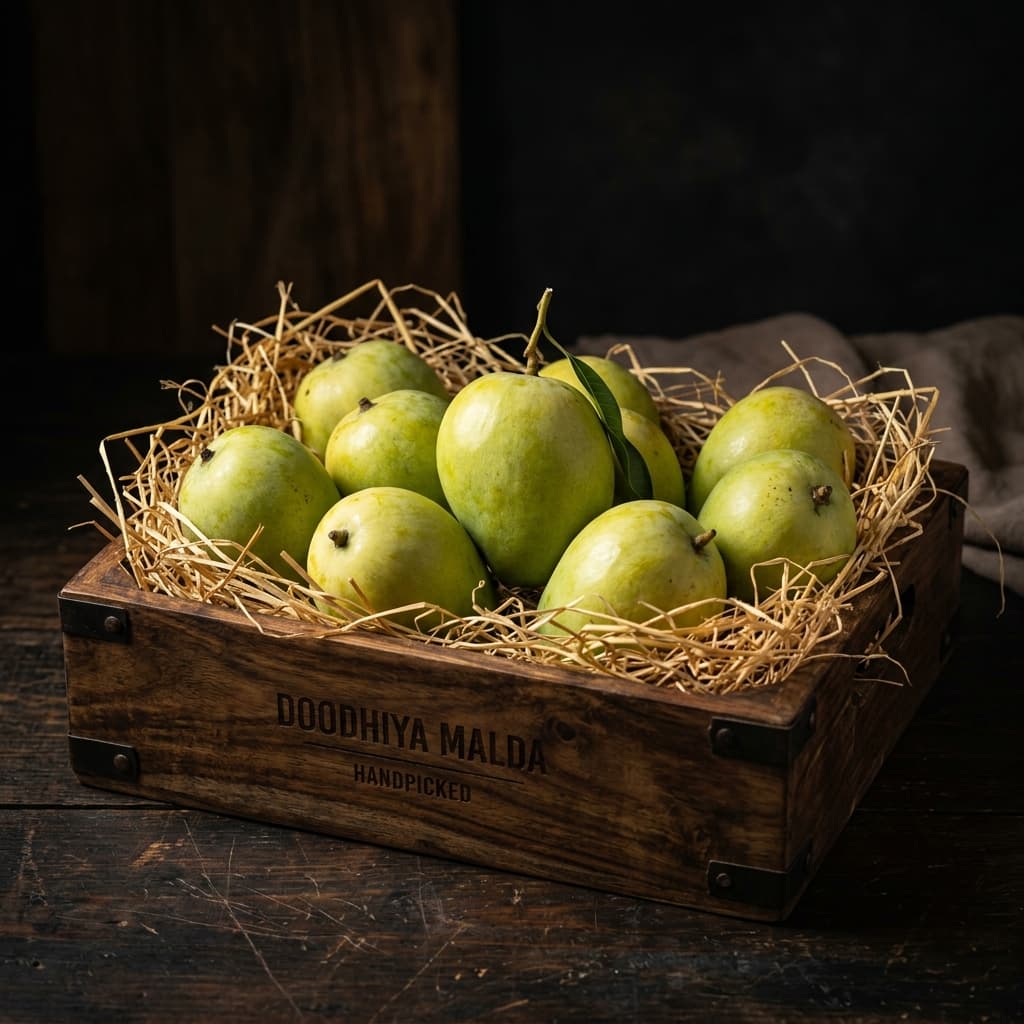
Visual identification profile photo of Doodhiya Malda showing Broadly oval with plump cheeks and slightly flattened base and natural peel color gradient
Visual Reference: Doodhiya Malda (240 - 320g per fruit)

Doodhiya Malda

πŸ“ Native Provenance: Digha, Patna, Bihar

ShapeBroadly oval with plump cheeks and slightly flattened base
Average Weight240 - 320g per fruit
Brix Sweetness19 - 21Β° Brix
Beak FeatureSmall distinct beak

Peel Gradient: Pale light green to creamy-yellow; very thin skin

Pulp & Fiber: Opaline, pale golden flesh; milky, floral, delicate sweetness

πŸ” The Dead Giveaway: Milky white sap (doodh) at the pedicel harvest point and delicate, thin, translucent peel.

Explore Complete Variety Guide
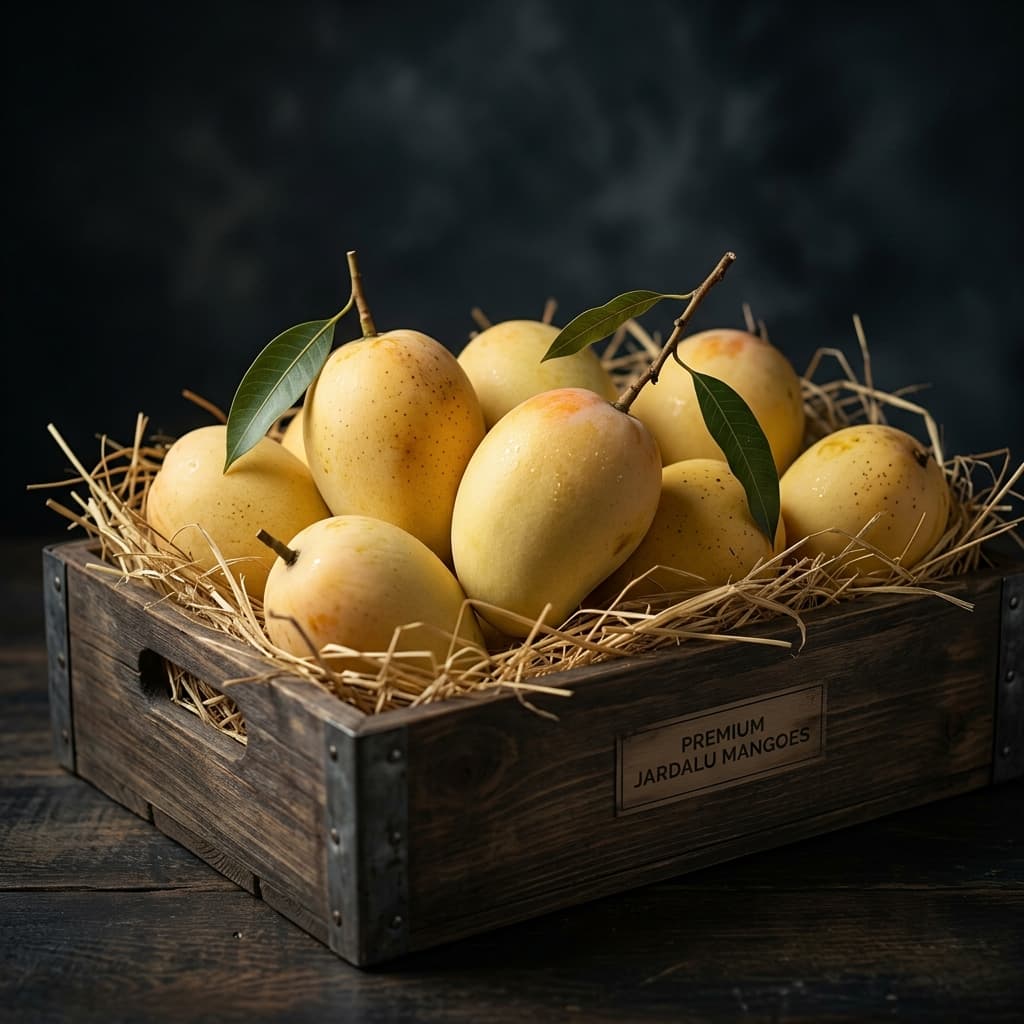
Visual identification profile photo of GI-Tagged Jardalu showing Oblong with an upwardly curved, pointed tapering beak and natural peel color gradient
Visual Reference: GI-Tagged Jardalu (180 - 240g per fruit)

GI-Tagged Jardalu

GI Certified Origin

πŸ“ Native Provenance: Bhagalpur, Bihar

ShapeOblong with an upwardly curved, pointed tapering beak
Average Weight180 - 240g per fruit
Brix Sweetness18 - 20Β° Brix
Beak FeatureDistinct pointed beak pointing upwards

Peel Gradient: Bright golden yellow with a luminous, light sheen

Pulp & Fiber: Soft, melting yellow pulp with a unique hint of toasted pistachio and honey aroma

πŸ” The Dead Giveaway: Prominent tapering upturned beak and light, airy floral fragrance favored by diplomats and presidents.

Explore Complete Variety Guide
Visual identification profile photo of Totapuri (Ginimoothi) showing Long, distinctively curved beak resembling a parrot's bill and natural peel color gradient
Visual Reference: Totapuri (Ginimoothi) (300 - 450g per fruit)

Totapuri (Ginimoothi)

πŸ“ Native Provenance: Krishnagiri (Tamil Nadu), Chittoor (Andhra Pradesh), Karnataka

ShapeLong, distinctively curved beak resembling a parrot's bill
Average Weight300 - 450g per fruit
Brix Sweetness13 - 16Β° Brix
Beak FeatureExtremely prominent pointed beak tip curving downward

Peel Gradient: Greenish-yellow with a vibrant crimson or red blush on the sunny shoulder

Pulp & Fiber: Pale yellow, firm, crunchy and tangy; high pectin content

πŸ” The Dead Giveaway: Unmistakable parrot-beak hooked nose; popularly enjoyed raw with red chili powder and rock salt.

Explore Complete Variety Guide
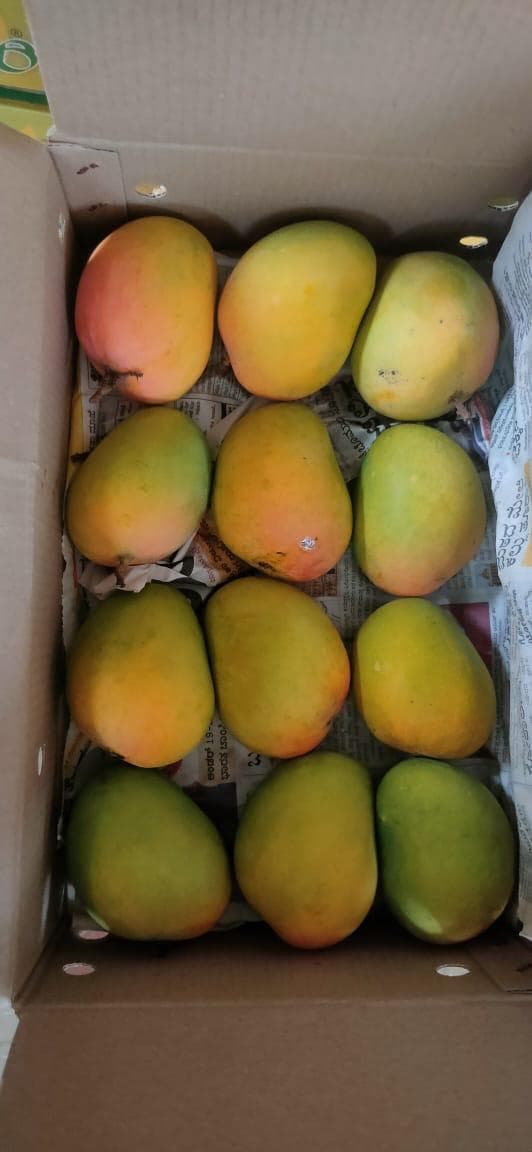
Visual identification profile photo of Karnataka Badami showing Ovate with a slight almond-like elongation and natural peel color gradient
Visual Reference: Karnataka Badami (220 - 280g per fruit)

Karnataka Badami

πŸ“ Native Provenance: Dharwad & Belgaum, Karnataka

ShapeOvate with a slight almond-like elongation
Average Weight220 - 280g per fruit
Brix Sweetness17 - 20Β° Brix
Beak FeatureRounded apex with subtle sinus

Peel Gradient: Bright golden yellow; thinner peel than Northern cultivars

Pulp & Fiber: Pale orange, smooth and sweet; known as the 'Alphonso of Karnataka'

πŸ” The Dead Giveaway: Almond-like gentle contour and sweet, milder aromatic profile arriving early in March.

Explore Complete Variety Guide

Taste Authenticated, Farm-Direct Original Cultivars

Every Aam Native box is backed by GI-certification traceability, zero calcium carbide ripening, and direct harvest from heritage orchards.

Shop Certified Original Mangoes β†’