The Traditional Ratnagiri Wooden Peti: Why It's the Authentic Way to Buy Alphonso
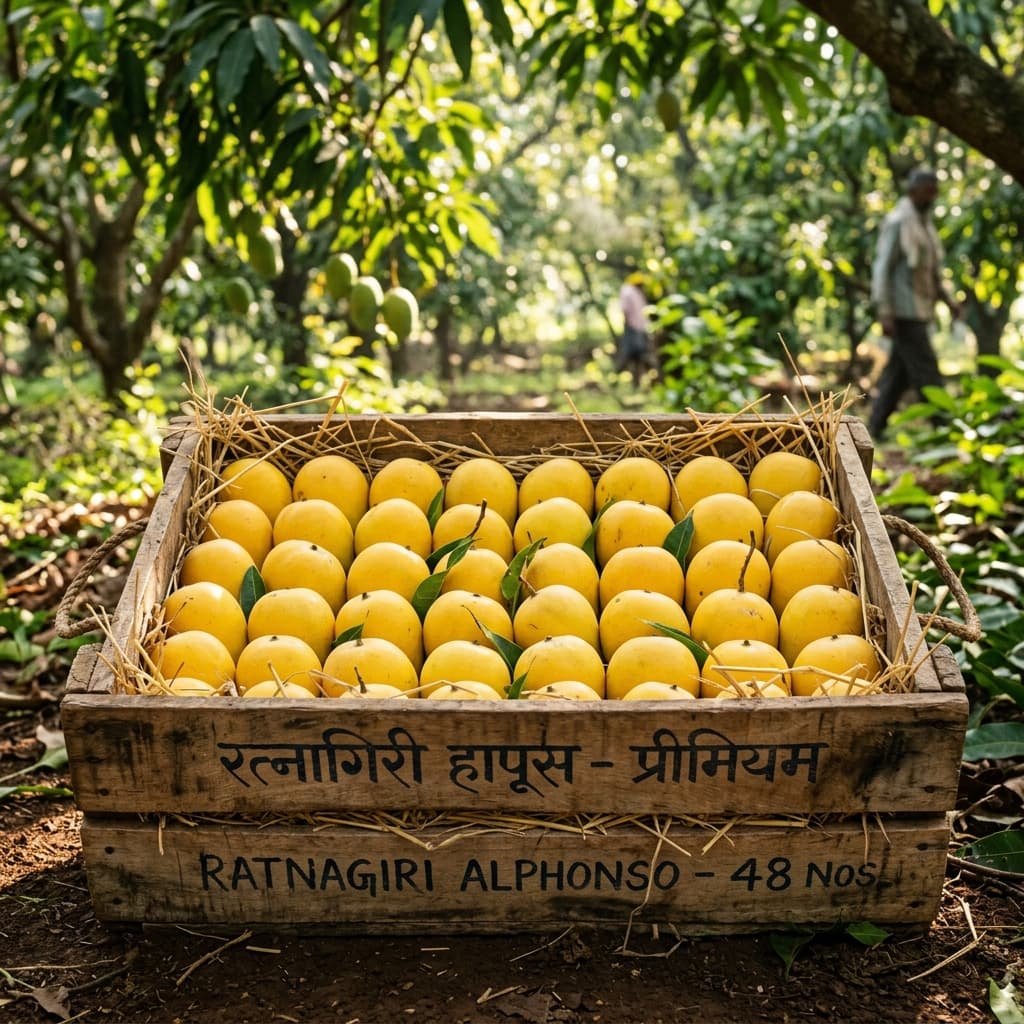
If you grew up in a traditional Maharashtrian household, the arrival of the wooden peti marked the official beginning of summer. Long before the era of plastic crates and cardboard boxes, the peti was the only way the King of Fruits traveled from the lush Konkan coast to the royal courts and city markets.
At Aam Native, we are reviving this traditional experience for those who want to savor the authentic Ratnagiri harvest at its finest.
What is a Traditional Wooden Peti?
What is Wooden Peti (Crate)?
A traditional rustic crate made of thin planks of native wood, used for the bulk transport of Alphonso mangoes. Each peti is hand-packed with mangoes nestled in layers of dried rice straw to facilitate natural ripening through uniform heat retention.
The peti is more than just packaging; it is a micro-environment. The wood allows for ventilation while the rice straw provides insulation, trapping the natural ethylene gas emitted by the fruit to ensure a perfectly even, golden ripeness.
The Economics of Bulk: Peti vs. Boxes
For large families, festive celebrations, or corporate gifting, the peti offers the highest value-per-mango in the Ratnagiri market.
Comparison: Why Traditional Wood Wins
Modern supply chains prefer corrugated cardboard for its light weight, but for the discerning mango lover, the wooden peti remains superior.
Direct Comparison
| Feature | Corrugated Cardboard Boxes | Traditional Wooden Peti |
|---|---|---|
| Cardboard boxes are convenient for small gifts but can suffocate the fruit if not ventilated properly. Wooden petis with rice straw allow the fruit to 'breather' and ripen naturally over 3-5 days, developing a deeper saffron hue and more intense aroma. | Cardboard boxes are convenient for small gifts but can suffocate the fruit if not ventilated properly. Wooden petis with rice straw allow the fruit to 'breather' and ripen naturally over 3-5 days, developing a deeper saffron hue and more intense aroma. |
← Swipe horizontally to view full table →
The 4-Dozen Peti Experience at Aam Native
When you order our 4 Dozen (48 pieces) Wooden Peti, you aren't just getting fruit; you're getting a Konkan heirloom.
- Natural Ripening: Your mangoes arrive partially green and ripen safely inside the rice straw over a few days.
- Keepsake Quality: The rustic wooden crate is often repurposed by our customers as home decor, garden planters, or rustic storage.
- Farm-Direct Traceability: Every peti comes from our GI-certified orchards, hand-plucked at the peak of maturity (250g+ per piece).
How to Handle Your Peti
When your peti arrives, resist the urge to unpack it immediately!
- Keep it Closed: Let the mangoes stay in the straw for 24-48 hours. The aroma escaping the box will tell you when they are ready.
- The Sniff Test: Once the fragrance fills the room, check for the characteristic golden-yellow skin.
- Store Right: Once ripe, move the mangoes to a cool, dry place. Avoid refrigeration until they are fully ripened to protect the complex flavor profile.
Experience the authentic Konkan summer. Order the Traditional 4-Dozen Wooden Peti and taste the difference that heritage makes.
Found this helpful?
Share it with someone who loves mangoes.
Continue Reading
You Might Also Like

Farm-Direct · GI-Certified
Ready to taste the real Alphonso?
Zero carbide. Naturally ripened. Delivered in 24–48 hours.
Shop Mango Boxes →