The Science of Ripening: Haystack vs. Carbide

The journey of an Alphonso mango from a green, starchy drupe to a golden, sugary delicacy is entirely dependent on how it is ripened. In the modern supply chain, the race for quick profits has introduced dangerous shortcuts, primarily the use of Calcium Carbide.
At Aam Native, we refuse to compromise, relying exclusively on the ancient, natural Haystack (Bhagar) method. Here is the science behind why it matters.
The Threat of Calcium Carbide
Calcium carbide (CaC₂) is an industrial chemical commonly used for welding. When it reacts with the moisture in the air, it produces acetylene gas, an analogue of ethylene (the natural ripening hormone).
What is Calcium Carbide Ripening?
An illegal artificial ripening method where industrial calcium carbide pouches are placed with unripe fruit. It forces the skin to turn yellow overnight, but leaves the internal flesh starchy, acidic, and potentially contaminated with arsenic and phosphorus.
Why is it dangerous?
- Toxicity: Industrial-grade calcium carbide contains traces of arsenic and phosphorus, which can cause severe neurological and digestive issues. The FSSAI has strictly banned its use in India.
- Poor Taste: It only ripens the skin. The pulp remains hard, fibrous, and lacks the signature Brix (sugar) levels of a true Alphonso.
- Zero Aroma: Carbide-ripened mangoes have virtually no smell, or worse, a faint garlic/chemical odor.
The Natural Haystack Method (Bhagar)
In the Konkan region, the traditional method of ripening is called Bhagar. It is a masterclass in natural chemistry.
Direct Comparison
| Feature | Haystack (Bhagar) Ripening | Carbide Ripening |
|---|---|---|
| Haystack ripening uses the fruit's own natural ethylene gas trapped in warm rice straw over 4-6 days, resulting in uniform sweetness. Carbide forces skin color change in 12 hours but ruins the internal flavor. | Haystack ripening uses the fruit's own natural ethylene gas trapped in warm rice straw over 4-6 days, resulting in uniform sweetness. Carbide forces skin color change in 12 hours but ruins the internal flavor. |
← Swipe horizontally to view full table →
How it Works:
- Mangoes are harvested at exact physiological maturity (when the "shoulders" of the fruit widen).
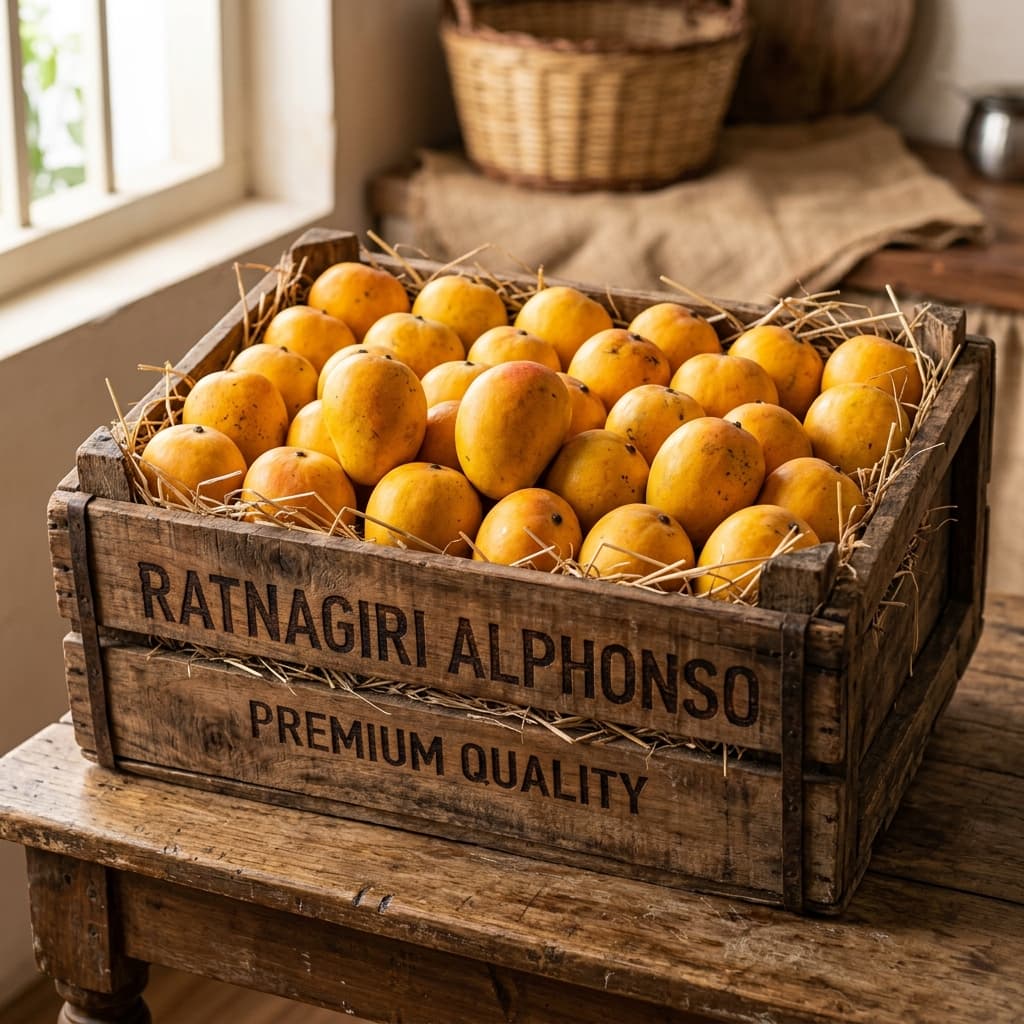
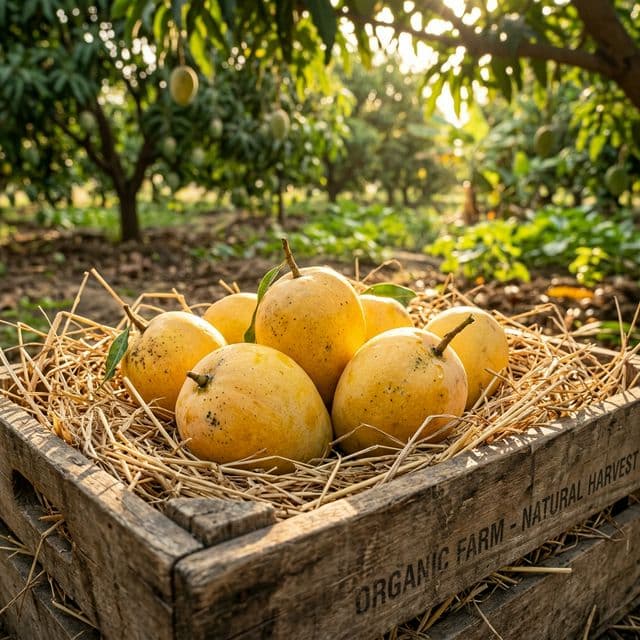
- They are placed in well-ventilated wooden crates and nestled deep within dry rice straw or wood shavings.
- The straw acts as a natural insulator, trapping the heat and the naturally occurring ethylene gas emitted by the mangoes themselves.
- Over a period of 4 to 6 days, this trapped natural gas initiates the conversion of complex starches into simple sugars.
The Result
The haystack method requires patience, space, and a high tolerance for natural weight loss (mangoes lose up to 10% of their weight during natural ripening). But the result is undeniably superior: the flesh becomes buttery, the skin develops a rich saffron gradient, and the Brix levels soar to 20+.
When you buy from Aam Native, you are investing in safety, tradition, and the unadulterated, natural sweetness of the true Ratnagiri Alphonso.
Found this helpful?
Share it with someone who loves mangoes.
Continue Reading
You Might Also Like
Farm-Direct · GI-Certified
Ready to taste the real Alphonso?
Zero carbide. Naturally ripened. Delivered in 24–48 hours.
Shop Mango Boxes →