How to Identify Real Alphonso Mangoes (Avoid Fakes)
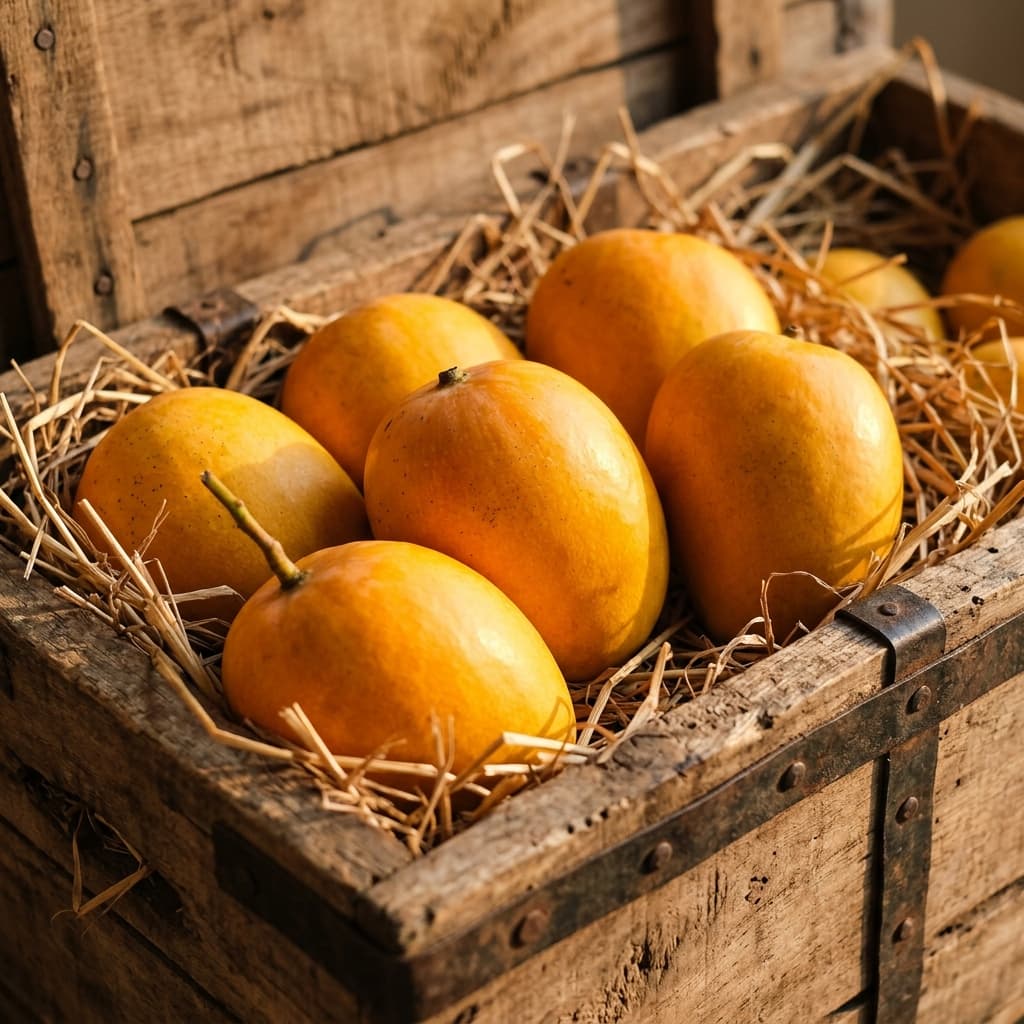
How to Identify Real Alphonso Mangoes (And Avoid Fakes)
How to Identify Real Alphonso Mango, 7 Expert Tests That Never Fail
India's mango market is awash with imitations. Kesar mangoes from Gujarat, Badami from Karnataka, unnamed hybrids from Andhra Pradesh, all are sold as "Alphonso" or "Hapus" every season, often at near-Alphonso prices. For the uninitiated buyer, distinguishing the real Ratnagiri Alphonso from a convincing fake is genuinely difficult.
This guide gives you 7 practical, expert-backed tests to identify real Alphonso mangoes, whether you are buying from a market stall, a supermarket, or an online seller. These methods work before you buy and after delivery.
Why Fake Alphonso Is Such a Widespread Problem
The economics are simple: a genuine GI-certified Ratnagiri Alphonso box (12 mangoes) retails for ₹2,499–₹2,999. A box of Kesar or Badami mangoes of similar size costs ₹600–₹900 at wholesale. The profit margin on fraudulent "Alphonso" is enormous, which is why the practice is so persistent.
The fraud happens at multiple levels:
- Variety substitution: Selling a different variety as Alphonso
- Origin fraud: Selling Karnataka or Andhra Alphonso (a related but different clone) as "Ratnagiri Alphonso"
- Chemical ripening: Selling unripe or under-ripe mangoes artificially yellowed with carbide
- Grade mixing: Filling a premium-labeled box with a mix of genuine Alphonso on top and inferior fruit underneath
Knowing how to identify the real fruit protects your money and your plate.
The 7 Tests to Identify Real Alphonso Mango
Test 1, The Smell Test (Most Reliable)
The Alphonso mango's aroma is its most distinctive and unfakeable characteristic. Real Ratnagiri Alphonso has an intensely floral, complex fragrance, a blend often described as peach, cream, saffron, and tropical flowers. This aroma is detectable before the mango is cut, emanating from the stem end and the skin when you hold it close.
How to use it: Bring the mango to your nose near the stem end before purchase. A genuine ripe Alphonso will smell intoxicating. A fake or carbide-ripened mango will have:
- No smell at all
- A faintly sharp, chemical smell (carbide)
- A generic, light tropical fruit smell without the saffron-floral complexity
If it doesn't smell remarkable, it's not real Alphonso.
Test 2, The Skin Color Test
Real Ratnagiri Alphonso at peak ripeness has a very specific color: deep saffron-yellow, sometimes with a slight orange blush on the sun-exposed cheek. The color develops gradually and naturally, it is never uniform bright yellow or orange.
What to look for:
- Genuine Alphonso: Saffron-yellow skin with natural mottling, often slightly deeper near the base and lighter near the tip
- Fake or carbide-ripened: Uniform bright yellow or orange, often with green patches near the stem that don't follow the natural ripening gradient
- Kesar masquerading as Alphonso: Kesar has a more orange-yellow skin with a smoother texture; Alphonso's skin has a slightly more textured, "waxy" feel
Test 3, The Shape and Size Test
Genuine Ratnagiri Alphonso has a characteristic shape:
- Ovoid to oblong, with a distinct curve (not perfectly symmetrical)
- A small, pronounced beak at the tip (the black tip or Kala tika as farmers call it), this small black spot at the non-stem end is a strong positive indicator
- Weight: 200–300g per mango for premium grade. Significantly larger mangoes (400g+) labeled as Alphonso are more likely to be Kesar or a hybrid.
The black tip is particularly important, while not all genuine Alphonso will have a prominent black tip (it depends on ripening stage and variety clone), its presence is a strong positive indicator.
Test 4, The Float Test
This is a field-expedient method used by experienced buyers and food safety inspectors:
Fill a bucket or large bowl with water. Place the mango in it. Observe:
- Genuine, naturally ripened Alphonso: Tends to sink or barely float (dense, full pulp, high sugar content)
- Carbide-ripened or hollow-feeling fruit: Tends to float (less dense pulp, gas pockets from rapid artificial ripening)
This test is not absolute, some genuine ripe mangoes float, but combined with other tests it adds useful evidence.
Test 5, The Pulp Color and Fiber Test
Cut the mango. Real Alphonso pulp is:
- Deep orange-saffron in color, almost the color of a ripe papaya or a saffron infusion
- Completely non-fibrous, the flesh should be smooth, without any stringy texture
- Uniform in ripeness, evenly ripe throughout, not hard near the seed and soft on the outside
Fake or substituted mangoes typically show:
- Pale yellow or orange pulp lacking the saffron depth
- Fibrous texture (a hallmark of Kesar and many other varieties)
- Uneven ripening, hard and starchy near the seed even when the outer flesh is soft
Test 6, The Seed-to-Pulp Ratio Test
Real Alphonso has a relatively small, flat seed and an exceptionally high pulp-to-seed ratio, one of the characteristics that makes it so prized. When you cut an Alphonso, the seed should be thin and flat, leaving generous pulp on all sides.
Kesar mangoes have a similar ratio, which is why Kesar is one of the harder substitutions to detect without the aroma test. However, Kesar will still fail the smell test, it has a pleasant but distinctly different aroma (more citrus-forward, less floral-creamy).
Test 7, The Price and Source Test
This is not a physical test but it is perhaps the most practically important:
- If it's cheap, it's suspicious. Genuine GI-certified Ratnagiri Alphonso from verified farms cannot be sold at ₹500/dozen profitably. The production cost, GI compliance, post-harvest handling, and cold-chain logistics all add up. If someone is selling "Alphonso" at ₹200–₹600/dozen, walk away.
- If it's available in January or February, it's fake. Alphonso season does not begin before mid-March. Full stop.
- If the seller cannot tell you where it's from, it's suspect. A genuine farm-direct seller should be able to name the district, often the taluka, and sometimes the specific orchard.
A Quick Reference: Real Alphonso vs Common Fakes
| Feature | Real Ratnagiri Alphonso | Kesar (Gujarat) | Badami (Karnataka) | |---|---|---|---| | Aroma | Intense floral-creamy | Citrus-forward, pleasant | Mild, generic | | Skin Color | Deep saffron-yellow | Bright orange-yellow | Pale yellow-green | | Pulp Color | Deep saffron-orange | Bright orange | Yellow-orange | | Fiber | None | Slight | Moderate | | Black tip | Often present | Absent | Absent | | Season | March–June | May–July | April–June | | Price (farm-direct) | ₹2,499–₹2,999/dozen | ₹800–₹1,200/dozen | ₹600–₹900/dozen |
The Safest Solution, Buy Farm-Direct
All seven tests exist because the distribution chain between farmer and consumer is long and opaque. The safest way to guarantee genuine Alphonso is to eliminate the middlemen entirely.
At Aam Native, our mangoes travel from GI-certified Ratnagiri farms directly to your door. No mandi, no wholesaler, no trader who might substitute or adulterate. Every box is traceable to a specific farm, with harvest date documentation. We back our claims with a freshness guarantee, if your mangoes are not genuine Ratnagiri Alphonso, we replace the order.
Frequently Asked Questions
Can I use a refractometer to test if my mango is real Alphonso?
A refractometer measures Brix (sugar content). Genuine peak-season Alphonso registers 20–24° Brix. While this doesn't prove GI origin, a reading below 18° Brix in a mango sold as Alphonso is a strong indicator that the fruit is either not genuine or was harvested too early. Refractometers are inexpensive (₹500–₹1,500) and useful for any serious mango buyer.
Is Alphonso mango the same as Hapus?
Yes. "Hapus" is the Marathi pronunciation of Alphonso, both names refer to the same variety. The name "Alphonso" traces back to Afonso de Albuquerque, the Portuguese viceroy who is credited with introducing grafting techniques to Goa and the Konkan coast in the 16th century. "Hapus" is the colloquial name used by farmers and consumers in Maharashtra.
What should I do if I receive fake Alphonso from an online seller?
Document your evidence, photograph the mangoes, note the smell and taste, and compare against the tests in this article. If you bought from a marketplace (Amazon, Flipkart, BigBasket), file a product quality complaint through their consumer portal. If you suspect GI fraud specifically, you can file a complaint with the GI Registry of India or contact FSSAI's food safety helpline (1800-11-4000). Always buy from verified, transparent farm-direct sellers with a published return policy.
Stop guessing. Start knowing. Order genuine GI Certified Ratnagiri Alphonso Mangoes from Aam Native, verified origin, carbide-free, farm-direct. Shop Now at Aam Native.
Found this helpful?
Share it with someone who loves mangoes.
Continue Reading
You Might Also Like
Farm-Direct · GI-Certified
Ready to taste the real Alphonso?
Zero carbide. Naturally ripened. Delivered in 24–48 hours.
Shop Mango Boxes →