Carbide-Free Alphonso Mango: Why It Matters
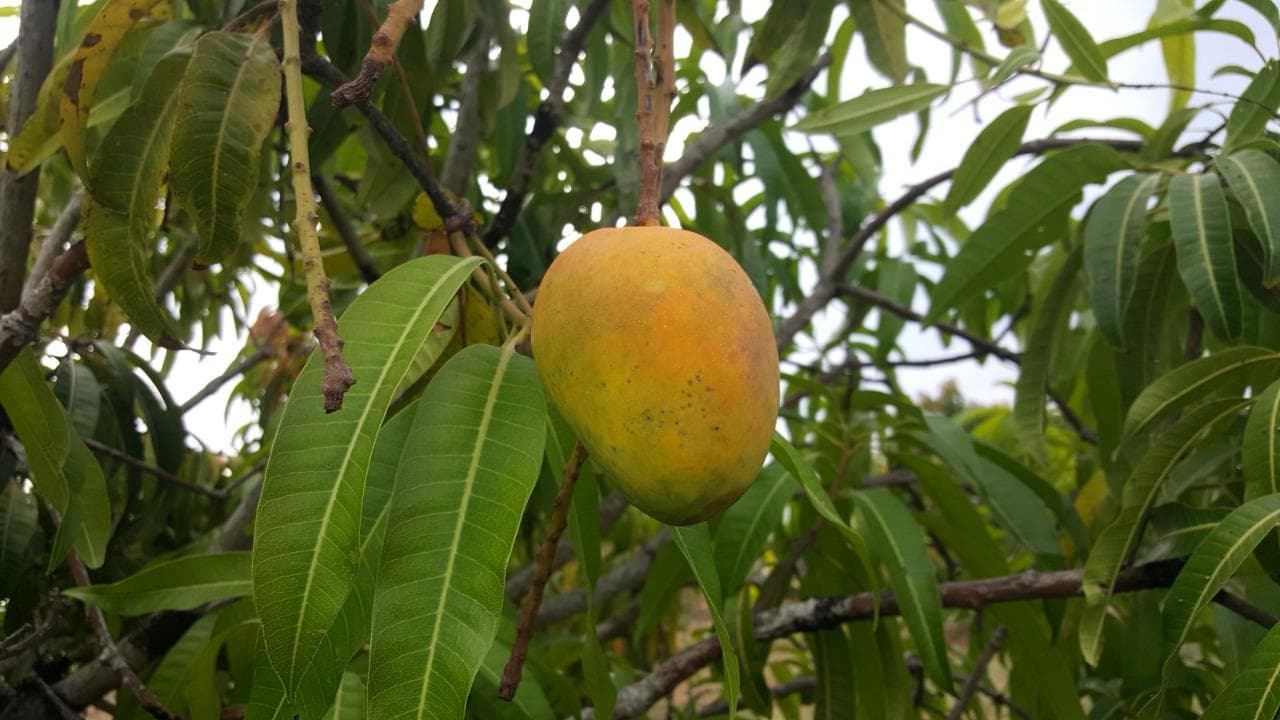
Carbide-Free Mangoes: Why It Matters for Your Family
Carbide-Free Alphonso Mango, The Truth About How Your Mango Was Ripened
Every mango season, millions of Indian families buy what they believe are premium Alphonso mangoes. But a disturbing percentage of what reaches market, from wholesale mandis to supermarket shelves, has been artificially ripened using calcium carbide, a chemical that is explicitly banned for food use in India.
This is not a fringe concern. It is a mainstream food safety issue that affects every consumer who buys mangoes in India. Here is everything you need to know about carbide ripening, the health risks it poses, and how to ensure the mangoes your family eats are genuinely carbide-free.
What Is Calcium Carbide and Why Is It Used on Mangoes?
Calcium carbide (CaC₂) is an industrial chemical primarily used in welding and the production of acetylene gas. When it comes into contact with moisture, it releases acetylene gas, which mimics the ripening action of ethylene, the natural plant hormone that triggers fruit ripening.
Unscrupulous traders use carbide pellets in mango crates because it is:
- Extremely cheap, a few rupees per kilogram
- Fast, mangoes ripen in 12–24 hours instead of 4–7 days
- Visually deceptive, carbide-ripened mangoes develop yellow skin quickly, appearing ripe
The result is a mango that looks ripe on the outside but is often unripe, starchy, or unevenly ripened inside, lacking the natural sweetness and aroma of a genuinely tree-ripened or straw-ripened Hapus.
Is Carbide Ripening Legal in India?
No. It is banned.
Under Rule 44 of the Food Safety and Standards (Prohibition and Restrictions on Sales) Regulations, 2011, the use of calcium carbide for ripening fruits is explicitly prohibited in India. The Food Safety and Standards Authority of India (FSSAI) oversees enforcement.
Specifically, the regulation states that no person shall sell or offer for sale any fruit which has been artificially ripened by using acetylene gas generated through calcium carbide.
The Enforcement Gap
Despite the ban, enforcement remains inconsistent. FSSAI and state food safety departments conduct seasonal raids, particularly in major metros during mango season, and regularly seize carbide-ripened consignments. However, at the wholesale mandi level and in smaller towns, carbide use continues largely unchecked.
This is why consumer awareness and direct sourcing are your most reliable protections.
Health Risks of Calcium Carbide Residues on Mangoes
Calcium carbide used on fruits is often technical grade, not food safe, meaning it frequently contains impurities including arsenic and phosphorus compounds. These can remain on the fruit surface and, in some cases, penetrate the flesh.
Short-Term Health Effects
Consuming carbide-contaminated fruit has been associated with:
- Nausea, vomiting, and diarrhea
- Headaches and dizziness
- Skin tingling and numbness (from acetylene inhalation during handling)
- Mouth ulcers, particularly in children
Long-Term Health Concerns
Arsenic and phosphorus compounds are known to be toxic with chronic exposure. While single-exposure risks are debated, the concern is significant for young children, pregnant women, and immunocompromised individuals who may consume large quantities of mangoes over an extended season.
A 2019 study published in the Journal of Food Science and Technology documented detectable arsenic residues on carbide-treated mangoes purchased from Indian markets, raising legitimate food safety concerns.
Nutritional Degradation
Beyond toxicity, carbide ripening accelerates ethylene simulation without allowing the fruit's natural enzymatic processes to complete. This means:
- Lower sugar content (mangoes taste bland or starchy)
- Reduced carotenoid development (the deep saffron color of real Alphonso comes from natural lycopene and beta-carotene accumulation)
- Shorter shelf life after ripening (carbide mangoes often rot within 1–2 days)
How to Identify Carbide-Ripened Mangoes
Spotting carbide-ripened mangoes requires attention to a few key indicators:
The Skin
Carbide-ripened mangoes often show uneven coloration, yellow patches with green spots near the stem, or an overall uniform yellow that looks "painted on" rather than naturally developed. Real Alphonso develops a warm saffron tone that deepens gradually from the stem end.
The Smell
This is the most reliable test. A naturally ripened Alphonso has an intensely floral, sweet aroma that is detectable even before cutting, sometimes described as a blend of peach, cream, and tropical flowers. A carbide-ripened mango will have little to no aroma, or may smell faintly chemical near the stem.
The Texture
Press gently near the stem. A naturally ripened mango gives evenly and feels full. Carbide-ripened mangoes often feel soft only in patches, with hard spots remaining, because the ripening was uneven.
The Taste
Cut the mango. Naturally ripened Alphonso pulp is deep orange-saffron, non-fibrous, and intensely sweet with a Brix reading of 20–24%. Carbide-ripened mangoes are often pale yellow inside, mildly sweet, and lack the creamy richness of the real fruit.
The Alternative: Naturally Ripened Alphonso
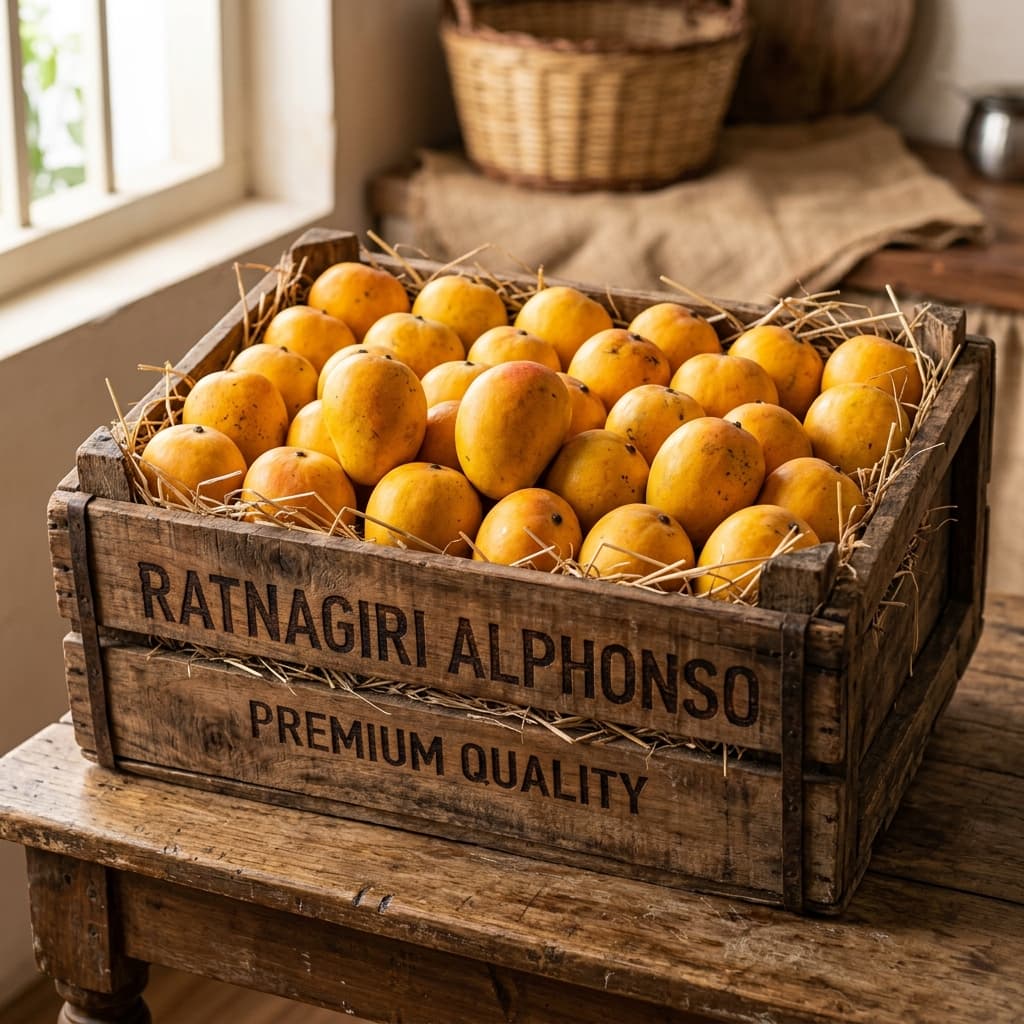
Traditional Alphonso ripening uses paddy straw (hay), mangoes are packed in crates with loose straw, which creates a warm, humid microenvironment that triggers natural ethylene release. This process takes 4–7 days but produces:
- Uniform, natural ripening throughout the flesh
- Full development of aromatic compounds
- Superior sweetness and flavor complexity
- Longer eating window (2–3 days after fully ripe)
Some premium farms and e-commerce sellers also use ethylene gas chambers, a permitted, food-safe method using controlled concentrations of natural ethylene, which replicates the straw process with greater consistency and hygiene.
Why Aam Native Is Genuinely Carbide-Free
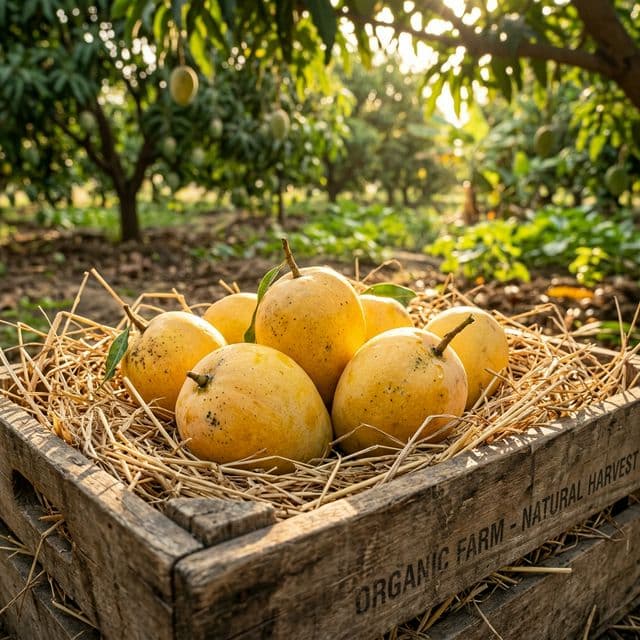
At Aam Native, carbide-free is not a marketing claim, it is a sourcing requirement. Every farm in our network practices natural straw ripening. Our mangoes are harvested at the correct maturity index (determined by float tests and skin color checks) and ripened in straw beds for the full 4–7 days before dispatch.
We maintain direct farmer relationships in Ratnagiri district, which means full traceability from tree to box. If you ever have a concern about your order, we can tell you exactly which farm it came from.
Frequently Asked Questions
How can I test at home if my mangoes were ripened with carbide?
The most accessible home test is the smell test and the water test. For the water test: place the mango in a bucket of water. A naturally ripened mango tends to sink (denser pulp); carbide-ripened ones may float due to gas pockets inside the flesh. This test is not 100% definitive but is a useful indicator alongside the aroma check.
Are all yellow mangoes carbide-ripened?
Not at all. Yellow skin is the natural state of a ripe Alphonso. The issue is how it got there. Natural yellowing takes days and involves complex biochemical changes. Carbide yellowing happens overnight with none of those internal changes taking place.
Does washing mangoes remove carbide residues?
Washing with clean water removes surface residues to a significant degree. Some food safety experts recommend washing with a dilute baking soda solution (1 teaspoon per liter of water) for 10–15 minutes, then rinsing thoroughly. However, the safest approach is to source carbide-free mangoes from the start.
Your family deserves better. Order Carbide-Free Ratnagiri Alphonso Mangoes from Aam Native, farm-direct, naturally ripened, delivered fresh. Shop Now at Aam Native.
Found this helpful?
Share it with someone who loves mangoes.
Continue Reading
You Might Also Like

Farm-Direct · GI-Certified
Ready to taste the real Alphonso?
Zero carbide. Naturally ripened. Delivered in 24–48 hours.
Shop Mango Boxes →