GI Certified Alphonso Mango: The Mark of Authenticity You Need to Know
What is GI Certification for Alphonso Mangoes?
GI Certified Alphonso Mango: The Mark of Authenticity You Need to Know
The Alphonso mango, known as Hapus in Marathi, is not just a fruit. It is a cultural institution, a seasonal obsession, and India's most prized agricultural export. But in a market flooded with imitations, one question matters more than ever: what does GI certified alphonso mango actually mean, and why should you care?
This article breaks down the Geographical Indication (GI) certification system, what it guarantees, and how it protects both farmers and consumers.
What Is a Geographical Indication (GI) Tag?
A Geographical Indication (GI) tag is an intellectual property right granted under the Geographical Indications of Goods (Registration and Protection) Act, 1999, administered by the Government of India. It is equivalent to a certificate of origin with legal teeth.
A GI tag is awarded to products that have a specific geographic origin and possess qualities, reputation, or characteristics that are essentially attributable to that origin. The tag protects producers in that region and assures consumers of authenticity.
Which Alphonso Mangoes Have GI Certification?
In India, the Alphonso mango grown in specific districts of the Konkan coast, namely Ratnagiri, Sindhudurg, Palghar, Thane, and Raigad, received its GI tag in 2018 (GI Application No. 571). The certifying body is the Konkan Krishi Vidyapeeth (KKV), the agricultural university of the Konkan region.
This means any mango labeled "GI Certified Alphonso" must originate from one of these five districts. A mango grown in Karnataka, Gujarat, or any other state, no matter how good, cannot legally carry this GI certification.
Why GI Certification Matters for Alphonso Mangoes Specifically
The Alphonso mango is perhaps India's most counterfeited fruit. Every mango season, tonnes of inferior varieties, Kesar, Langra, or unnamed hybrids, are artificially ripened with calcium carbide and sold as "Alphonso" at premium prices across Mumbai, Delhi, Bengaluru, and in export markets.
GI certification creates a traceable, verifiable chain from orchard to consumer. Here is what it actually guarantees:
Geographic Authenticity
The mango must be grown in the certified Konkan belt. The laterite soil (murrum), the specific microclimate influenced by the Arabian Sea, the pattern of rainfall and dry summers, these factors produce the Alphonso's signature saffron-yellow skin, non-fibrous pulp, and Brix sugar levels of 20–24%.
Varietal Purity
Certified producers use grafted saplings of the authentic Alphonso cultivar. The rootstock and grafting practices are regulated to prevent genetic drift that dilutes flavor and aroma.
Post-Harvest Standards
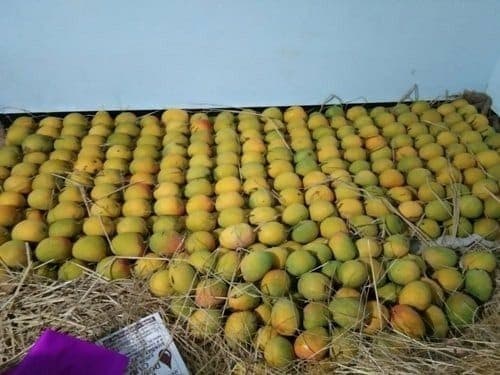
GI-certified Alphonso must be naturally ripened, traditionally in hay (straw). Chemical ripening using calcium carbide is explicitly prohibited under GI protocols, as well as under the Food Safety and Standards Authority of India (FSSAI) regulations, which ban carbide use for food ripening nationwide.
How to Verify GI Certification When You Buy
Unfortunately, the GI tag alone does not guarantee that every box you receive is genuine. Here is how to verify:
- Look for the GI logo, A certified seller should display the official GI mark issued by the GI Registry.
- Ask for farm traceability, Legitimate farm-direct sellers like Aam Native can provide farm location details, farmer names, and harvest dates.
- Check the season, Genuine Ratnagiri Alphonso arrives in markets between March and June. Mangoes sold as "Alphonso" outside this window are almost certainly not authentic.
- Look at pricing, Real GI-certified Alphonso is expensive for a reason. A 1 dozen box of 200–250g mangoes costs ₹2,499–₹2,999 from genuine farm-direct sources. Suspiciously cheap "Alphonso" is a red flag.
- Examine the fruit, Authentic Alphonso has a distinctive saffron-yellow skin (not bright orange), a small black tip, and an intoxicating floral aroma even before cutting.
GI Certification and the Farmers Behind It
The GI tag is not just a consumer protection tool, it is an economic lifeline for over 100,000 mango farming families in the Konkan region. By legally protecting the name "Alphonso" from misuse, the GI system allows farmers to command fair prices for their labor and expertise.
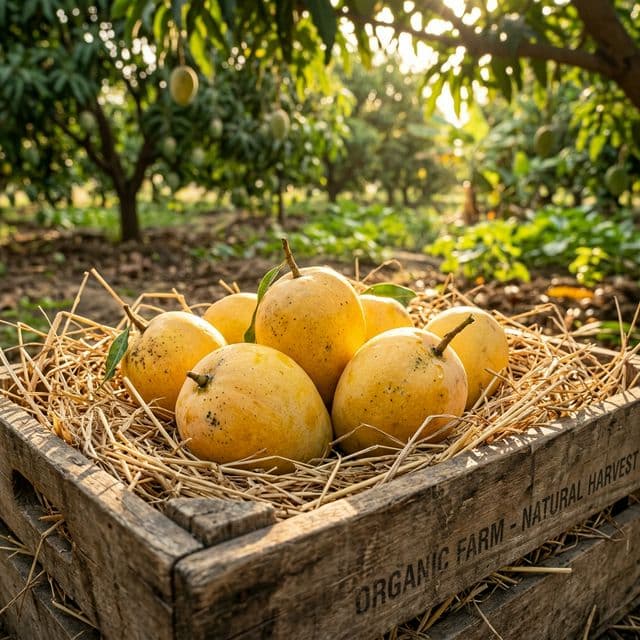
Many Ratnagiri farmers practice generations-old orchard management. Trees are often 30–60 years old, maintained without chemical fertilizers in many cases, and harvested by hand to prevent bruising. The GI framework helps ensure their premium product is not undercut by cheap imitations.
Aam Native's Commitment to GI-Certified Alphonso
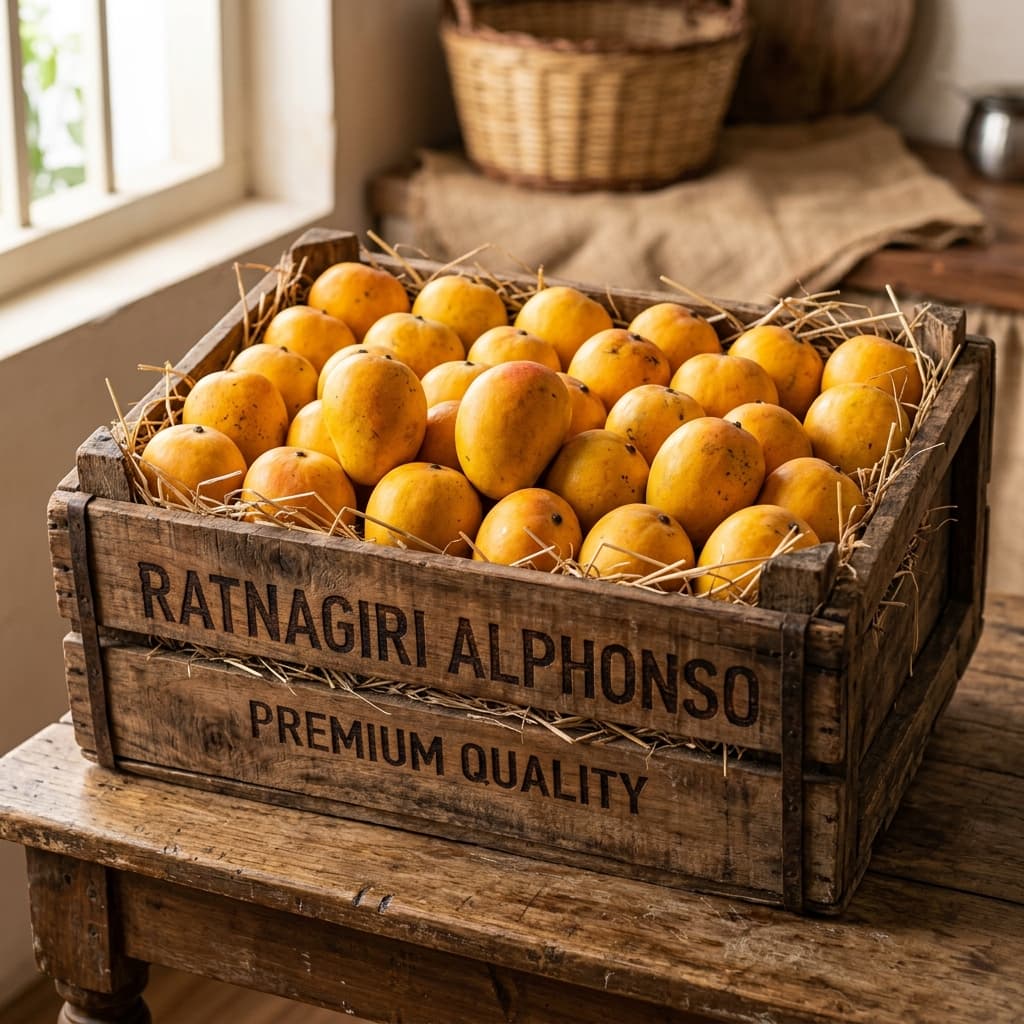
At Aam Native, every box of Ratnagiri Alphonso mango is sourced directly from GI-certified farms in Ratnagiri district. We work with a curated network of farmers who follow natural ripening practices, no carbide, no chemicals, no cold-storage manipulation.
When you order from Aam Native, you are not just buying a mango. You are buying a verified origin story, a sustainable farming relationship, and the assurance that what arrives at your door is the real Hapus.
Frequently Asked Questions
Is GI certification the same as organic certification?
No. GI certification guarantees geographic origin and varietal authenticity. Organic certification (under NPOP or PGS-India) separately certifies that no synthetic pesticides or fertilizers were used. Some Alphonso farms hold both certifications, but they are independent.
Can Devgad Alphonso also be GI certified?
Yes. Devgad falls within Sindhudurg district, which is one of the five districts covered under the Alphonso GI tag. Both Ratnagiri and Devgad Alphonso can carry GI certification, though they have subtle differences in flavor profile (discussed in our Ratnagiri vs Devgad comparison article).
What happens if a seller falsely claims GI certification?
Under the GI Act, misusing a registered GI tag is a criminal offense punishable by imprisonment of up to 3 years and a fine of up to ₹2 lakh. Consumers who suspect fraud can file a complaint with the GI Registry or FSSAI.
Ready to taste the real thing? Order your box of GI Certified Ratnagiri Alphonso Mangoes directly from the farm. Shop Now at Aam Native, farm-fresh, carbide-free, delivered to your door.
Found this helpful?
Share it with someone who loves mangoes.
Continue Reading
You Might Also Like
Farm-Direct · GI-Certified
Ready to taste the real Alphonso?
Zero carbide. Naturally ripened. Delivered in 24–48 hours.
Shop Mango Boxes →